
The shift to digital workflows has changed restorative dentistry forever. One of the most impactful advances is the use of digital facebow technology within exocad. Unlike analog methods, digital records provide clinicians and labs with precise functional data that can be integrated directly into the design process.
1. Accurate Occlusal Plane Orientation
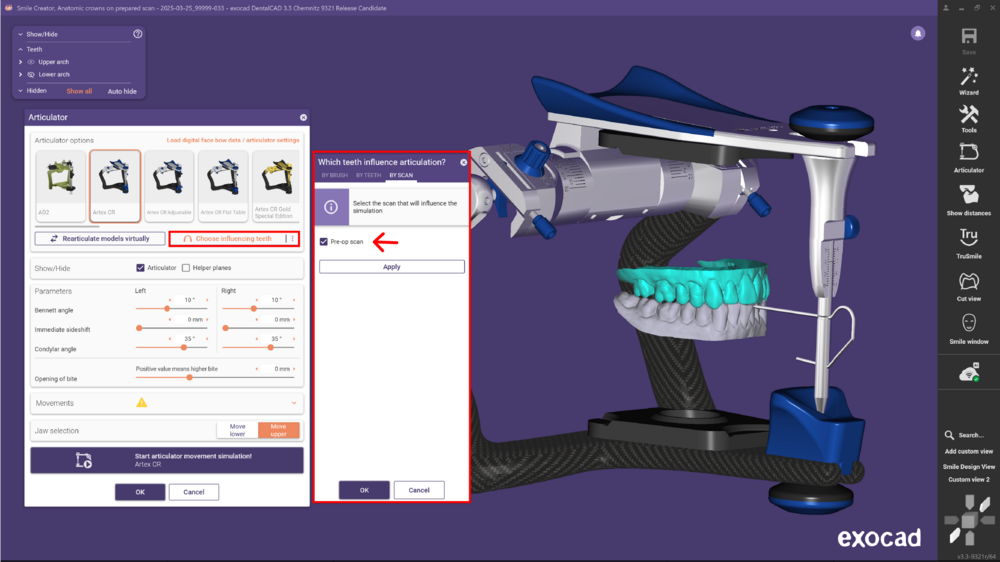
Tools like the Kois Digital Occlusal Plane Analyzer allow the clinician to capture the patient’s true occlusal plane relative to craniofacial landmarks. These records can be imported into exocad’s Virtual Articulator for restorations that respect esthetics and function.
2. Dynamic Jaw Motion Records
Systems such as Zebris capture mandibular movements—protrusion, laterotrusion, and hinge-axis function—in real time. When integrated into exocad, these records allow restorations to be designed for both static occlusion and dynamic function.
3. Seamless Lab-Clinic Communication
When digital facebow data and jaw motion records accompany intraoral scans and bite registrations, labs can work with a far clearer picture of the patient’s functional anatomy. This reduces guesswork, minimizes remakes, and improves efficiency.
4. Predictable Restorations
By combining intraoral scans with digital facebow and jaw motion data, exocad users can move beyond average value settings to patient-specific occlusion. The result: fewer adjustments, greater stability, and better long-term outcomes.


